
Here, I explore ideas and questions about emerging technologies, human and AI collaboration, and how we coordinate around shared goals. They draw on my experience in strategic partnerships, independent research and conversations across disciplines. Some are early reflections; others connect to ongoing experiments and projects.
Human Capability
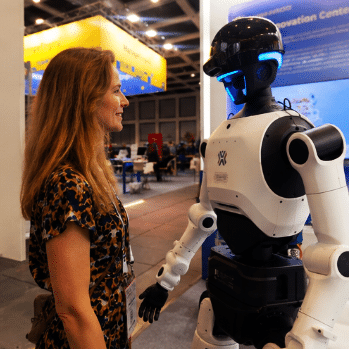
Physical AI & Trust
The future of work is not Human vs AI. It is Human + AI
For most of history, technology has extended human capability.
Physical AI is different because it will become a collaborator rather than simply a tool.
That changes the question.
We should no longer ask:
“What can robots do?”
We should ask: “What becomes possible when humans and intelligent machines work together?“
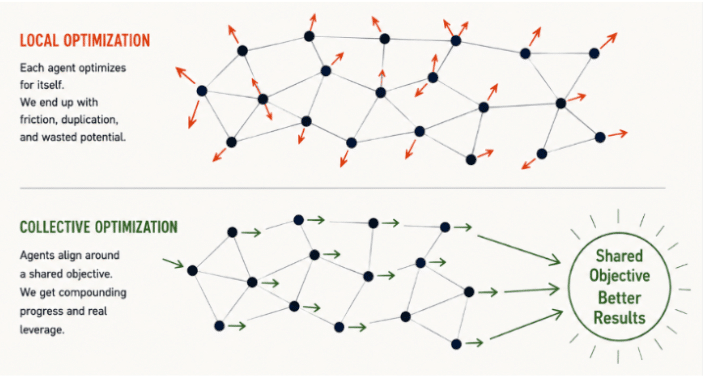
We spend a lot of time asking how intelligent AI will become. Perhaps the more important question is:
Can it help us coordinate better? One of the biggest challenges we face is not intelligence. It is incentives. Scientists optimize for discovery.
Companies for growth. Governments for political cycles. Individuals for what makes sense in their immediate environment.
Each decision can be perfectly rational. Yet together, they can produce outcomes nobody intended.
This becomes even more important as AI and Physical AI enter our systems. A highly capable machine does not automatically create a better result.
Capability without coordination can simply make existing incentives more powerful. So perhaps the next frontier is not only artificial intelligence.
It is collective intelligence. Can intelligent systems help us see beyond our local objectives, coordinate across organizations and disciplines, and align actions toward shared results? Because intelligence alone has never been enough. What matters is what we coordinate it toward.
Industrial Intelligence
The next industrial revolution might not be about automation.
It might be about where intelligence lives. For decades, industrial systems have separated human expertise, machines, data and decisions. AI is starting to connect them.
A robot can sense. A system can reason.
A human can intervene. Data can flow across the entire process.
The interesting question is no longer simply: What can we automate?
It is: How should humans and intelligent machines work together across the whole system?
That is where I see the real potential of Industrial Intelligence.
Not fewer humans. Not smarter machines in isolation.
A more intelligent industrial system.
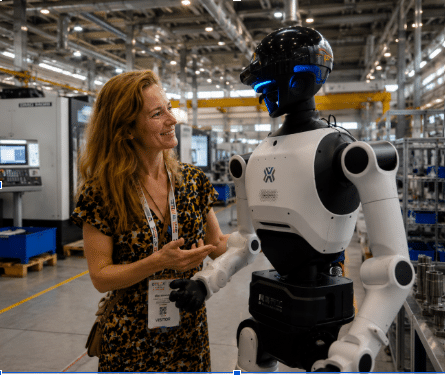
AI and Human/Machine Development
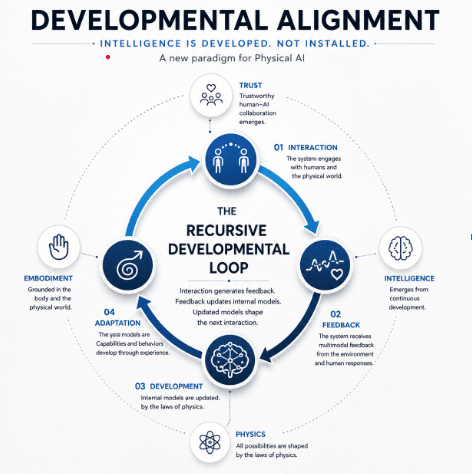
We build AI as if intelligence comes first and alignment comes later.
But humans do not develop that way. We reach, touch, fall, adjust and try again.
Intelligence is developed, not installed. What if AI should develop the same way?
Instead of aligning intelligence after it emerges, perhaps we should design learning processes in which intelligence and alignment develop together.
I call this Developmental Alignment. The question becomes: How do we design the development of aligned intelligence?
For Physical AI, this question becomes particularly important. A robot operating around people cannot rely only on what it was optimized to do. It needs to continuously learn from interaction with the physical and social world.